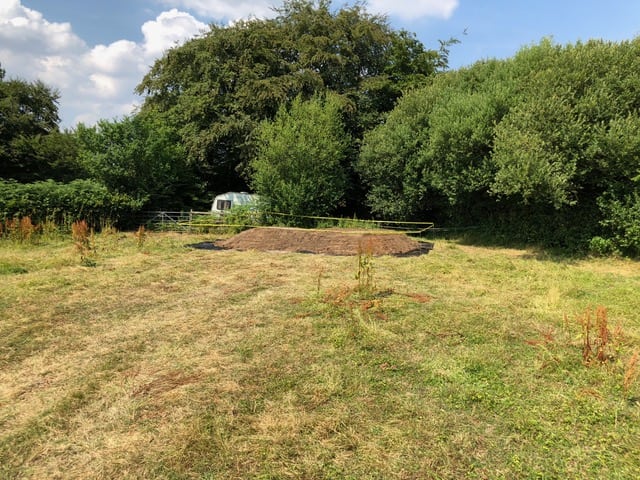
As no two Japanese knotweed-contaminated sites are the same, treatment starts with our surveyors visiting the site to establish the most appropriate treatment or removal method in accordance with our management plan.
Treatment may involve the use of more than one of the recognised Japanese Knotweed treatments, including: –
The treatment solution depends on various important factors. For example, if there is no building work planned in the near future and there is no urgent requirement to have the Japanese knotweed removed, then treatment can often proceed by means of a Herbicide Application Programme (HAP) alone. Most lenders are willing to release mortgage funds on the basis that the (new) owner (or, in some cases, the vendor) undertakes to complete a HAP, and the programme is carried out as necessary.
Southwest Knotweed are qualified to provide the following treatment solutions:
A variety of herbicides can be used to treat Japanese knotweed. The most cost-effective treatment is to spray the foliage of the knotweed plant with those chemicals which are permitted for use on Japanese knotweed. Treatment typically has to be repeated for several years before the knotweed is effectively controlled, since the rhizomes can still be viable for a period of time.
Japanese knotweed treatment will occur between April and September and will involve at least two applications each season for a minimum of three years. This will be followed by monitoring visits.
The Herbicide Application Programme offers treatment to on-site knotweed with a recognised suite of herbicides applied over three consecutive growing seasons. Evidence of dieback is usually seen following the first application in year one.
Where time is of the essence, e.g., a developer wishes to proceed with development and would incur costly delay if works did not commence immediately, a combined spraying and mechanical JK removal approach is usually the best option.
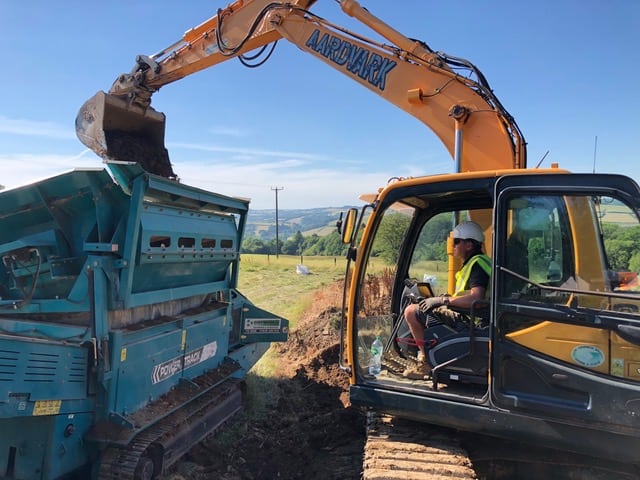
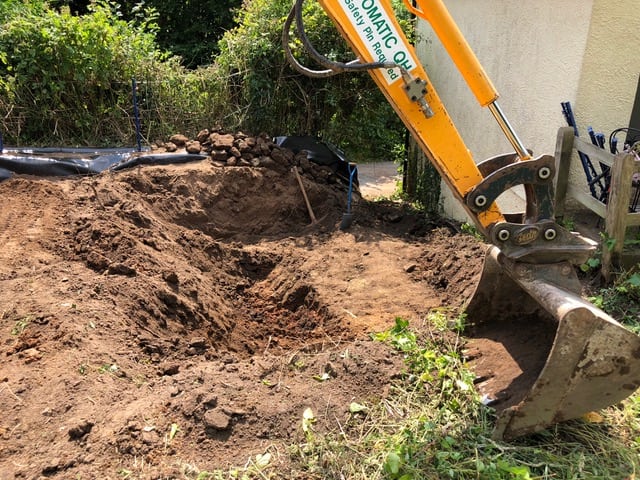
The ideal process is to apply herbicide a few weeks prior to mechanical removal in order to allow the herbicide to penetrate the root system as thoroughly as possible. Excavation to a depth of 3 to 5 metres and lateral excavation around any remaining knotweed sites to allow for spread.
All knotweed rhizomes must be removed and taken to a duly licensed facility authorised to take knotweed waste.
The carriers for all waste must be duly licensed, as must the landfill sites, and correct transfer documentation should be obtained.
This Japanese knotweed removal process is far more costly than a chemical treatment.
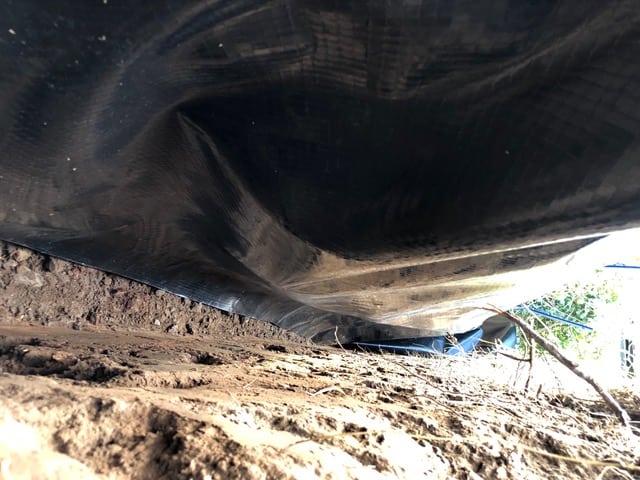
In some cases, geomembranes are placed to line the area to ensure that if there are any remaining rhizomes, the spread is contained and does not lead to any further spread.
Strictures for biosecurity must always be followed, including:
Be warned that even a piece of rhizome the size of your fingernail, or 0.7 grams – an incredibly small piece can result in an entirely new plant. Even after mechanical removal, it is highly recommended to monitor for any regrowth and follow up with spraying that may be required.